10 Jan,2026
Solar Energy for Homes
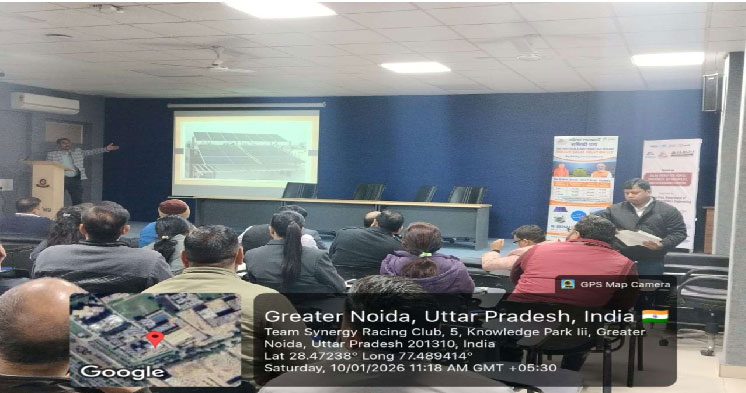
The Enigma Club of the Department of Electrical and Electronics Engineering successfully organized an awareness program titled “Solar Energy for Homes: Awareness, Affordability, and Government Support” on 10.01.2026. The event aimed to educate students and participants about the importance of residential solar energy systems, their economic and environmental benefits, and the various government subsidies and support schemes available for promoting solar adoption in India.
Session Highlights:
Session 1: Talk by Mr. Jayveer (Red Sun Solar Solution LLP) Mr. Jayveer delivered an informative session on the fundamentals of solar energy systems for residential applications. He explained the working principle of rooftop solar photovoltaic (PV) systems, key components such as solar panels, inverters, and net metering, and their role in reducing dependency on conventional electricity sources. He emphasized the long-term benefits of solar energy, including reduced electricity bills, low maintenance requirements, and contribution to environmental sustainability by reducing carbon emissions. The speaker also discussed how government-supported subsidy schemes make solar installations more affordable for homeowners, encouraging wider adoption of clean energy solutions.
Session 2: Talk by Mr. Ashutosh Shukla (AGS Green Renew Pvt. Ltd.)
In the second session, Mr. Ashutosh Shukla provided detailed insights into the affordability aspect of solar energy systems. He discussed various system capacities suitable for homes and highlighted how customers can choose appropriate solar power solutions based on their energy consumption.
He also elaborated on available government subsidies, financial assistance, and maintenance benefits that significantly reduce the initial investment cost. The speaker shared practical examples and cost structures to help participants understand the economic feasibility of installing solar systems at the residential level.
Interaction and Discussion:
The sessions were followed by an interactive question-and-answer segment, where participants actively engaged with the speakers. Queries related to installation procedures, subsidy eligibility, system maintenance, and return on investment were addressed in detail, making the event highly informative and engaging.
Conclusion:
The event successfully raised awareness about solar energy solutions for homes and highlighted the role of government support in making renewable energy accessible and affordable. The insights shared by both speakers motivated students and attendees to consider solar energy as a sustainable and economically viable option for the future. The Enigma Club and the Department of Electrical and Electronics Engineering expressed their gratitude to the speakers for sharing their valuable expertise and making the event a success.
Back